
The Vibe
has shifted.
This is what I imagined the future of music would be. I’ve been waiting for this for a long time.” -Rick Beato
"Like seeing Devo on SNL for the first time."
"Gave me the same feeling as hearing Smells Like Teen Spirit."
"I've been waiting for this for 40 years. I can't stop."
"I haven't been this excited about a band since Radiohead."
enter the exhibit 👇🏽
There's a particular kind of exhaustion settling over the world right now.
A tiredness.
Too many words.
Too many takes.
Too many feeds.
Too many performances pretending to be conversations.
Too many realities.
Something is shifting underneath it.
Not louder. Quieter.
A sound that doesn't argue with you. A rhythm that doesn't need your opinion. Music that holds you instead of performing for you.
No doubt you've felt the vibe shift.
You just don't have a name for it yet.
But we can listen to it together
Musical Mutations
Music scenes behave like adaptive traits.
When the environment shifts, so does the soundscape.
This isn't a history of genres.
It's a story of how people survive through sound when their world shifted.
What follows are five moments when music reorganized itself to meet the vibe shift of its era.
Not trends. Responses. Adaptations. Mutations.
The sound of life finding its immune response.
And all the vibes lead to Angine de Poitrine.
let’s travel back to the future . . . .
1970S
LOFT JAZZ
We Build our own Rooms
The future of music starts in the mid-1970s.
New York City is bankrupt. The Bronx is burning, literally. Seven census tracts lose more than 97% of their buildings to fire and abandonment. Landlords torch their own properties for insurance money.
But empty space is cheap space.
Musicians move into abandoned industrial lofts in SoHo, Tribeca, the Bowery, because nobody else wants to be there. The rent is nothing. The rooms are enormous. The collapse becomes the instrument.
No arrangements, no set lists. Just a room full of people and whatever happens next. The space between the notes matters as much as the notes.
the mutation
When the world fractures, sound occupies the cracks. DIY space becomes sanctuary. The room holds what the city can't.
1990S
trip-hop
Emotional Weight Found in Crates
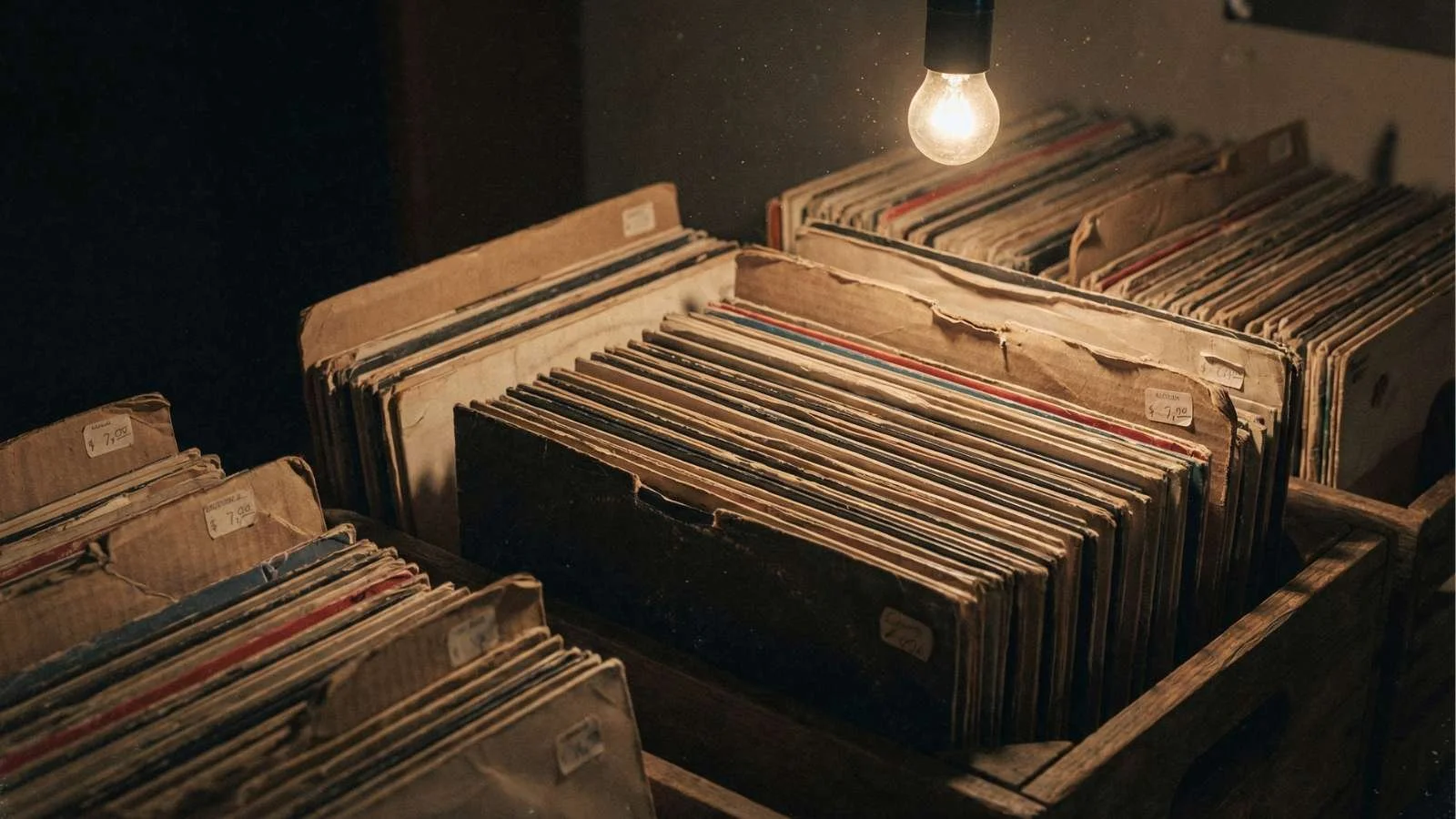
Post-industrial Britain. The factories closed. The manufacturing base that built cities like Bristol hollowed out. What remained: cheap rent, empty warehouses, and crates full of someone else's vinyl memories.
The Wild Bunch, a collective of DJs, MCs, and producers, throw parties in those warehouses. One of them is a kid named Robert Del Naja who paints graffiti. He will become Massive Attack.
They start digging through crates of old records. Film scores, soul, dub, jazz. Feeding them into samplers. Not to remix. To archaeologize.
DJ Shadow builds Endtroducing... entirely from samples. No original instrumentation. It sounds like memory itself.
the mutation
The present is empty, so you build from what came before. Sampling as archaeology. Memory as material. Beauty from wreckage.
2010s
Lo-FI
A Quiet Room in a Loud World
Lo-fi didn't arrive with swagger. It arrived with exhaustion.
A generation raised on infinite scroll, notification pings, and algorithmically optimized outrage built quiet worlds out of short loops, warm tape hiss, and tiny moments.
The anime girl studying at her desk became an icon. Millions of people watching a girl do homework while beats played underneath. Because the alternative was another dopamine trap disguised as content.
"Beats to relax/study to" became a category the platform could monetize.
The bedroom producer didn't need a label, a studio, or even a name. Anonymous, faceless, functional.
Music as self-medication delivered at platform scale.
Reduced cortisol. Increased focus. Anxiety relief. Slow tempo, no vocals, warm texture. The nervous system recognizes safety and settles.
the mutation
The loop becomes therapy. Music as personal sanctuary, accessible from a browser tab. But it's a sanctuary for one. Headphones on, world out.
2020s
barber beats
All Is Plundered!
Barber beats is a paradox.
Deeply derivative. Instantly comfortable.
A sound that shouldn't exist. But it does, because commoditized culture produces a specific kind of exhaustion that only a specific kind of softness can address.
It starts with vaporwave, the internet's strangest art movement. Slowed down corporate muzak and smooth jazz to expose the hollow promise underneath. Critique disguised as aesthetics.
Then something shifted: The irony softened. The critique became comfort. Producers started sampling the same lounge jazz and smooth funk, not to deconstruct it but to live inside it.
Haircuts for Men. Oblique Occasions. Producers with absurdist names making music that sounds like a hotel lobby in a dream you don't want to leave.
None of it is original music. All of it is original. 🏴☠️
That's the paradox of a culture where the algorithm has already decided what sounds right. The only move left is to rearrange what already exists into something that feels like yours.
the mutation
Hyperreality becomes a blanket. When everything feels disposable, this music makes disposability feel warm.
today
the future of music
"In a world of bs, AI, fake news and try hards, this is the perfect antidote."
"This makes me feel like there's still hope in this world."
"You stop trying after a while and you're just kind of bobbing your head and you just get lost in the sauce."
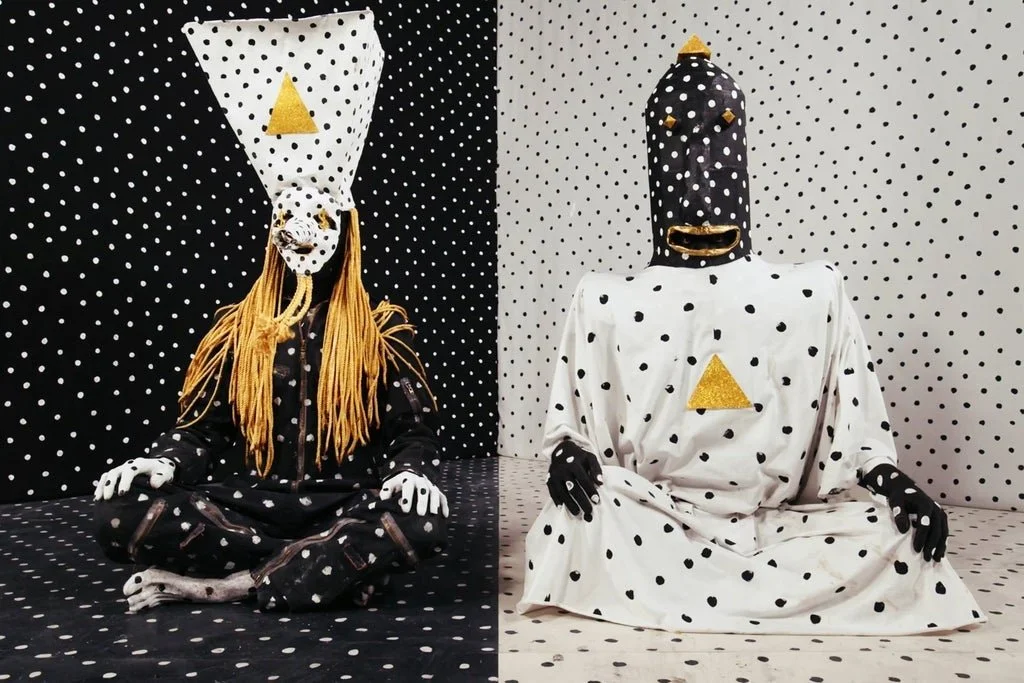
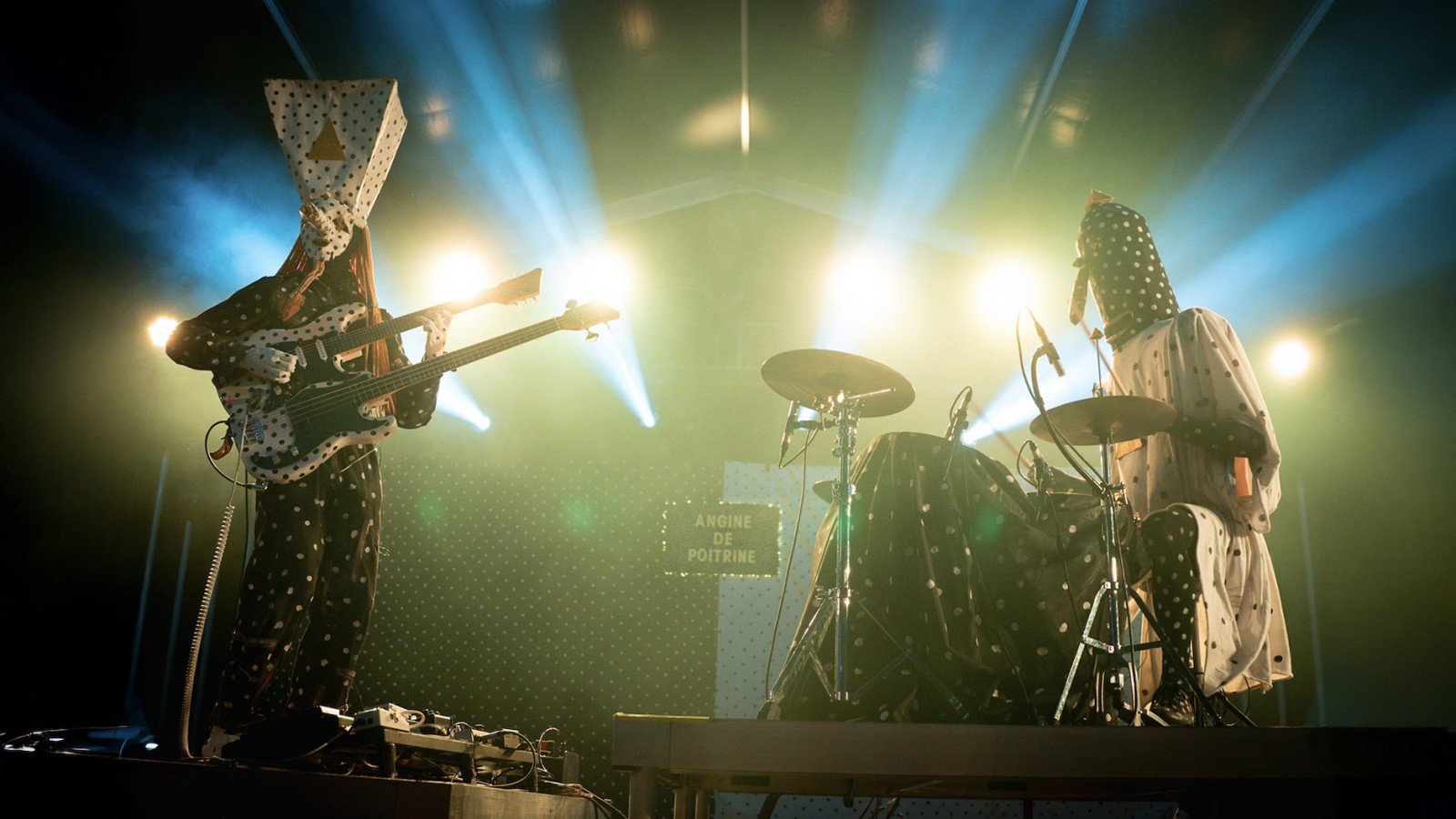
Two musicians from Saguenay, Quebec put on papier-mache masks as a joke, and they never took them off.
One plays a custom double-necked microtonal guitar. Both communicate only in an invented alien language. They call themselves Angine de Poitrine.
Their KEXP session from Trans Musicales has over six million views.
But Angine de Poitrine isn't alone.
The next mutation in music isn’t a genre its a behavior
Concealment and ego down regulation:
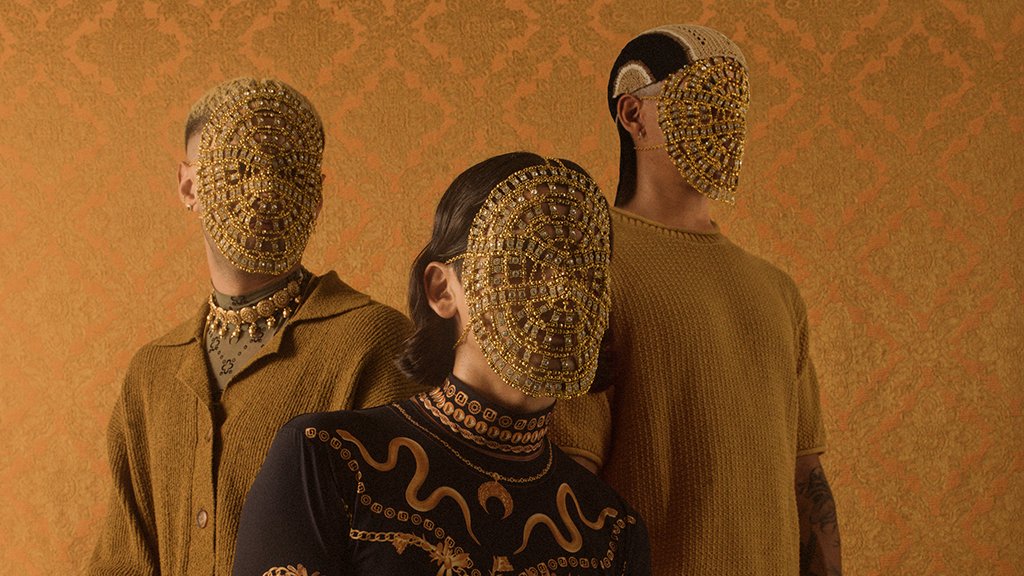
Papier-mache heads. Golden chains. Invented languages. The mask dissolves the brand. The listener becomes the protagonist.
Collective interplay:
Two brothers who look at each other, not the audience. Three people in matching wigs functioning as one groove. The ego dissolves into the conversation between players.
Instrumental democracy.
No hierarchy. The groove leads. Nobody steps forward because nobody needs to.
Three paths. Same destination.
the mutation
Music you don't listen to. Music you be with.
Press play and meet the Vibe Shift. ⤵️
Sublingual Radio Presents:
†H∑ V!BΞ SH!F† - M!X†∆PΞ
a transmission from between the notes
to help us remember how to feel again

The future wasn’t cancelled.
it went underground into groove.
45% of Gen Z turns to music where their grandparents turned to religion.
The tiredness you felt at the beginning of this?
These musicians felt it too.
They didn't theorize their way out of it.
They grooved their way out.
Dedicated to Mark Fisher (1968-2017) and Nancy L. Thomas (1960-2026), who taught us to think through music.